
Logistics
Engineering Intelligent, Resilient Supply Chains Through Connected Data

In modern logistics, value comes when fleets, warehouses, routes, inventory and customer commitments work as one connected system. With global networks, tight margins and constant disruption, performance must be visible, measurable and under control in real time.
Logistics providers turn to Data Inc to industrialise data and AI across the end-to-end supply chain, from first-mile planning to last-mile fulfilment. We build in traceable data foundations, optimisation models cleared for live use and operational controls, so routes improve, assets are better used and service becomes more reliable.
The foundation is a logistics-specific enterprise ontology, a connected data spine that ties fleet, warehouse, route, inventory, customer and compliance data into a single operational model. With it, decisions become auditable, exceptions surface sooner and automation is safe for production use.
Whether the aim is lower cost to serve, network optimisation, warehouse automation or regulatory assurance, we build governance, model control and operational resilience into daily logistics workflows.
That lets transformation scale and withstand disruption.
How Logistics Leaders Translate AI Into Controlled, Scalable Performance
AI sharpens routing, asset use and network visibility across logistics operations. In large distribution networks, value comes from models cleared for live use and governed for safety, compliance, third-party risk and operational resilience from day one.
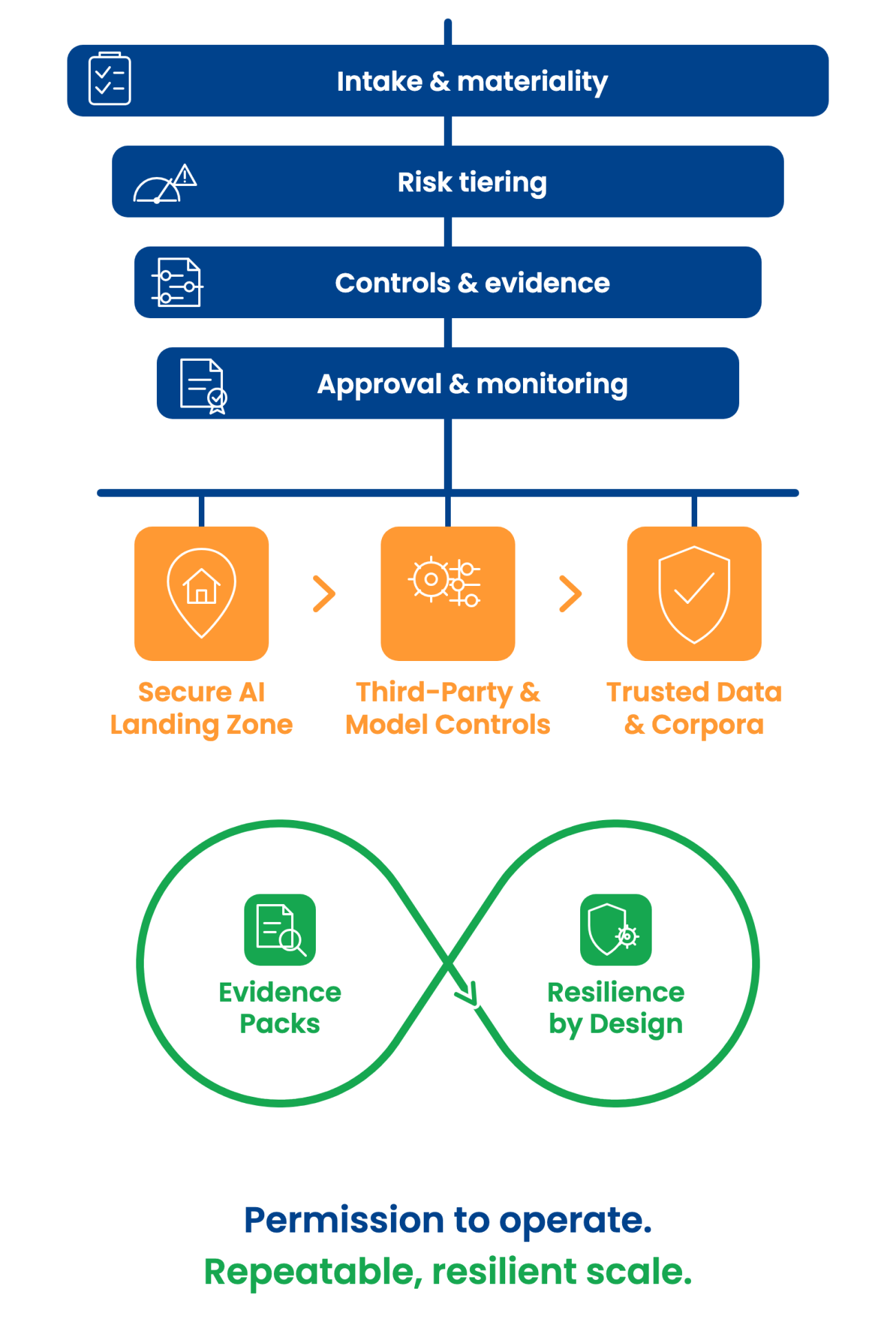
Across fleets and warehouses, AI has to run inside a controlled execution framework: traceable shipment and fleet data, validated optimisation models, built-in controls and live tracking of disruption. Lasting performance keeps automation in step with reliable service and contractual confidence.
Data Inc takes clients through a disciplined sequence, from one-off pilots to repeatable, network-ready production at enterprise scale.
What You Get in the First 6–8 Weeks
A network-wide AI use-case tiering model, with governed intake across fleet, warehouse and routing.
An “AI Permission-to-Operate” control standard, with defined roles, dispatch approval gates and evidence requirements in line with safety and compliance duties.
A deployable blueprint for a secure logistics AI landing zone, covering data intake, model validation, telemetry logs, monitoring and safe optimisation patterns.
Templates for release-ready evidence packs, plus the design of a live dashboard that tracks network performance.
A portfolio of 5–10 prioritised logistics use cases chosen for industrialisation across routing, asset use and warehouse automation, rather than pilot theatre.
Related case studies: Optimising Global Logistics Through Real-Time Delivery Intelligence
Ready to Make Your Transformation Measurable?
Your Supply Chain Is Only As Strong As Your Orchestration
Logistics enterprises face constant operational complexity. Our job is to turn it into controlled, scalable performance by connecting fleet systems, warehouse platforms and optimisation models.
Through our Integrated Transformation Framework™, operations, technology, partners and governance come together around trusted data and provable performance. It forms a logistics-specific enterprise ontology, so your supply chain speaks one language and delivers measurable value across the network.
Our aim is logistics transformation that is measurable and repeatable.
Insights from Data Inc
Ideas. Evidence. Measurable Outcomes.
Explore our latest articles and analyses, from AI and data governance to sustainable transformation.
Stay informed, inspired and ahead with insights that can transform your approach to data leadership.
Envalue™ Now Carries IFRS Standards Inside
A return is only as sound as the investment it is measured against.

Data Inc Joins the Claude Partner Network
London, July 2026 — Data Inc is pleased to announce that it has been selected as a member of the Claude Partner Network, Anthropic’s authorised partner programme for organisations that build Claude into their enterprise products and services. Data Inc joins the...

Transformation Has Always Been the Work
Transformation Has Always Been the Work The pace of change in enterprise technology continues to accelerate. AI is now a central part of that conversation, shaping how organisations think about growth, efficiency and scale. What stays consistent, however, is where...

Data Inc appointed to provide ISAE 3000 assurance for major UK Bank
London, January 2026 — Data Inc has been appointed by a global bank to give independent assurance on the replacement of its client account and asset platform. The work centres on data integrity, proof of customer value and control traceability at every step. The...

Scaling SME Performance through Connected Value Systems
Data democratization is revolutionising how organisations handle information by making data accessible to all employees, not just data analysts. This blog explores how companies like the Royal Bank of Scotland are leveraging this inclusive approach to enhance decision-making and customer experiences. Discover the key strategies for implementing effective data democratization, from adopting advanced analytics tools to ensuring robust data governance, and learn why this shift is essential for any competitive business in the digital age.

The Data Operating Model of Transformation
Data democratization is revolutionising how organisations handle information by making data accessible to all employees, not just data analysts. This blog explores how companies like the Royal Bank of Scotland are leveraging this inclusive approach to enhance decision-making and customer experiences. Discover the key strategies for implementing effective data democratization, from adopting advanced analytics tools to ensuring robust data governance, and learn why this shift is essential for any competitive business in the digital age.